Make Music People Can Actually Use (Label Secrets Revealed) | EF EP 81

 Spotify

 YouTube

 Apple Podcasts
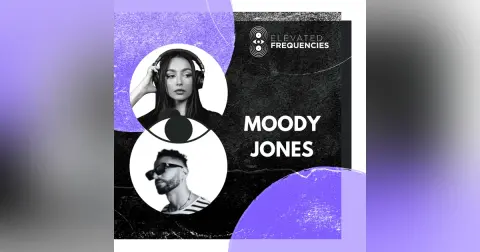
Think you know what your audience wants? This week's guest might change your perspective entirely. Moody Jones, GM of Disposable Records under EMPIRE, shares crucial insights about understanding how people actually experience music - insights that have helped his label generate over 20 million streams and launch careers across 10 countries.
From smuggling illegal CDs in Saudi Arabia to running a successful label, Moody's unique journey offers a fresh perspective on what really matters in today's music industry. If you're struggling to connect with audiences or wondering why your releases aren't getting traction, this conversation will help you understand what you might be missing.
Key Takeaways:
- Why understanding WHERE people listen is as important as WHAT they're listening to
- How to identify which contexts your music works best in
- The importance of experiencing music from your audience's perspective
- Why stepping away from the industry made him a better label executive
- How cultural shifts affect music preferences (and how to capitalize on them)
- The real reason some music connects more easily than others
- Why accessibility doesn't mean compromising artistry
Ready to level up your music career? Join my artist development program on Patreon for exclusive content and direct access to industry expertise: https://patreon.com/oliviamancuso
Want to learn more about Disposable Records? Follow @disposablerecs on Instagram.
Stop making music in a vacuum. Hit play now to learn how understanding your audience's experience could be the key to your success in electronic music.
Connect with me: instagram.com/oliviamancuso__
Connect with Moody: instagram.com/moodyjones
Video Editor/Audio Engineer: James Fixx
0:00 After I joined Empire, I would work with a lot of artists and it felt that in order for me to better do my role, I'd have to understand what it's like to be an artist today. I had to be in their shoes to get it. What's up guys, happy Thursday, happy new year if I haven't said so already. I don't think this is an unpopular opinion anymore. Maybe it is.
0:44 I don't love the holidays because of what it does to my schedule. Like up until the week ish before Christmas, I was waking up at six. AMI was locked into all of like the little habits that are hard to build, like remembering to take your vitamins and supplements at the same time and stretching and all these other things that I'm trying to do more consistently. And as hard as you try to to maintain that during the holidays, it does get thrown off. And so I'm always eager to jump back into the swing of things, but it just feels like such a bigger mountain to climb. And so I don't love the holidays for that reason, but I did love how much time I spent with family and friends.
1:27 Some of you guys who listen to this may know, maybe not. My brother Proper is a DJ. And having him home after he's been touring quite a bit to just, you know, have him play a personal set for me on Christmas, That's one of our traditions. I really did enjoy that. So that part was nice. But now it's time to get back to the grind. So let's get into today's episode. You know, as artists, as creatives, we often get caught up in the technical aspects of our craft. You know, as DJs, you want to perfect your production. You want to plan your releases perfectly. You want to build your social media presence meticulously. But today's guest has a perspective that might change how you think about your music career entirely now. Moody Jones started as a kid making mixtapes from Disney Records in Saudi Arabia, where most CDs were actually like, illegal to listen to and to possess. As you'll find out today, Moody is the GM of Disposable Records under Empire, where his understanding of how people actually experience music has led to over 20 million streams across their catalogue.
2:38 Now, here's what makes this conversation different. Moody did something unusual for a label executive. After years of telling artists what they should be doing, he actually stepped back into producing and deejaying himself after a very long hiatus. And that's because he realized that he couldn't truly help artists succeed without understanding their challenges first hand. So he got back in the game. And whether you're, you know, struggling with release strategies or wondering why your music isn't connecting or trying to find your place in this industry, this conversation will help you understand what really matters to your audience. And it may not be what you think. I'm excited to chat.
3:20 I was doing a little bit of research and I saw, maybe I saw this correctly. Did you start off like DJing by making mixtapes with Disney records? Is that? True. Yeah. I mean, it was, it was tapes. It was back to date tapes, you know, back in the day we got to have like 2 tape recorders and I remember I picked The Lion King tape as the main one because it it used to glow in the dark and I thought that was really cool. How old are you? Right now I'm 36. Right now, OK, I'm 33, so not too far off. I do. I do remember that. OK, so Lion King and what else? What were your other favorites? I mean, like, so this mixtape, which was called the King of Mixtape.
4:02 So I like Scratch Lion. So I just said King. That one had like, you know, Aladdin's greatest hits. What else did we have on there? Nothing from Little Mermaid. I was was like the I'm still a weird kid, but it was always like the cartoons no one watched would be my favorite, you know? Yeah, like Tailspin. I don't know if you remember. That yeah, I do, yeah. It was just like weird things those were. I also used to love Uncle Scrooge. I love it. With the duck, Yeah, you love the duck. Yeah, the millionaire duck. Yeah. Yep. Yeah, yeah. He's a role model. Come on. He's a role model. Yeah. So you've been, you've been at this for a while and and we'll get into what you're doing today, but I know that you have you pretty well travelled, you grew up in Egypt.
4:51 Is that am I correct in saying that? I was born in Egypt and I grew up in Saudi, OK, and then until I was 17 and then I moved to Canada and then OK, let's. Go wow. So tell me how your upbringing has influenced your taste in music and your journey in music. So growing up in Saudi, you know, back then it was like super religious, very closed, a lot of a lot of media was not allowed. So and then even speaking English was like frowned upon. But the 1% of people that were immigrants back then or expats, we all lived in close communities. So when I was growing up, like, you know, my best friends were like French, Italian, my girlfriend was German and I'm Canadian.
5:38 Like we were such a mixed group of people. And if you were Arab or or Egyptian and you spoke English and you went to a British school, so it was already like a like a melting pot even when I was a kid. So I went to like a British school. I was Egyptian. Most of people in the school were European. We were living in Saudi, you know, but that was the only life we knew. And then when it came down to music, so everything we learn about Western culture or modern culture came from TV, right? And so even MTV we had was different. In MTV you guys had like our MTV was MTV Germany and MTV France. It wasn't MTVUS. So our top hits were different, right? And like we listen to like German songs and French songs because that was big back then.
6:23 Our like go to channel was something called Viva, which is a Polish channel that played all the unedited records when we were kids. And back then, like MTV Europe played way more dance music than MTV America, you know what I mean? So even but as as kids, like we got exposed to these things, Mark, a lot of albums were banned. So anything heavy metal, anything rock was was considered Satanic music. And you weren't you were you couldn't even listen to it. Like I had to go to my friend's car. We had to like lower the music and listen to it so we don't get in trouble. Like my my favorite CD, like the like the limp biscuit CD. Well, this is now. Now I'm older, now it's C DS, not tapes, right? Right, moving, moving along. Yeah, we had to.
7:05 My at the time, I wasn't traveling internationally as much as my friends. But my friends would have to, like, hide it in their suitcase, like in their luggage, in between their clothes, because if they get caught with a limp Biscuit City or Corn City, they could go to jail. Yeah. So you know how today people talk, you know, people who play vinyl, you know, look down on people who are like, oh, you just download a record. And I have to imagine back then, it was like I had to smuggle ACD across across the border just to listen to it quietly in peace. And so I think that develops for a lot of immigrants, for a lot of expats, for a lot of people that grow up that way, a much deeper connection and a lot of nostalgia that, you know, we're, we're feel very blessed. I'm lucky to have access to such music today. Yeah, you'd have to develop a deeper appreciation because it was a scarce resource.
8:04 And thank you for the reality check that I think like every American needs every so often of how lucky we are that that's, you know, that was never a factor. You might have had strict parents for sure. I I'll never forget my dad ripping off my Chingy poster on the back of my door. He was, he was fine with the Beyoncé one, but not the Chingy 1, you know, so, so like, so. But that's the worst of it. So that's crazy. That must have really made you develop like just a unique ear because like again, that was a music was a scarce resource that you could only enjoy in secret. I like, I remember like me and my younger brother, we were in hella close even though we grew up together. But I remember 1 summer sounds bougie, but one summer we were in Spain with my parents and Eminem's Marshall Mathers had just come out and my dad was like, absolutely not, I'm not buying you that CD.
9:00 And I wanted my brother and I was like, listen, me and you don't get along, but I need you to cry right now. Like this is the moment where me and you create this bond. And he did. He fucking cried. And I was like, I think you should do the bigger, you know, be the bigger person and buy the CD. He's really crying about it. And as soon as he put that in the car, my dad went nuts. He. Was you can hear every word from that CD as clear as day. Yeah. Wow, that's, that's a great story. So I mean, you've had a lot of life experience between now and then, but now you're running disposable under Empire, which I want to get into. So talk to me about the journey to that point.
9:41 Cool. So when I was in Canada I started throwing parties just like everyone did in college and stuff like that. And then quickly I realized that I was really good at marketing the parties. And at the time I was studying industrial engineering. Then I like switched over to marketing. I was like, I think I'm really good at this. I switched over to marketing, started working all these random jobs and marketing from being a brand manager for Jaegermeister to doing marketing for like adult content. And then I got AI had a company that was an HR company that I ended up selling to like our main investor not selling, but like he just bought out the rest of the shares.
10:22 And then he was invested in his company called Wavo. Wavo was like a remix platform. So back in the day, you'd have to like follow on Facebook and then you could download the stems and then you answer a remix contest and people vote on it and then the best remix it's released or you just get 500 bucks or whatever. So they were transitioning from a remix platform. So like a marketing software for music. And so I, I joined right at that moment. I was there for four years. I started working with everyone from like Republic, RCA, Atlantic and Empire. And then I started consulting for Empire on the side. First I was offering the services for free. And then I started, you know, our business together started growing a lot.
11:02 And after two years, I said, yeah, yo guys, we should meet up in person. And when we met up, we just really clicked there. You know what the I think the team was like 30 people and I joined, I sat down with Nima, who's now the CEO and Gazid was The Who was the CEO and we just had a really good connection. I love their vision and till today and I'm still, it's one of the best decisions I made and one of the best opportunities they've given me. Wow and this whole time were you DJ ING too and producing? I took a break for like, I want to say seven years. Fuck, it sounds so long. Sorry. I keep swearing I got I. Was OK, I swear all the time. OK. Wow, seven years.
11:42 Yeah, because then at a point I was like, I can't, I don't think clients are going to take me seriously if I'm out, if I'm outside partying all the time, you know. And then after I joined Empire, I would work with a lot of artists. And then I started to hear myself like speaking with clients and things like that and, and be like, oh, you need to, you need to be posting this or, you know, you need to be proud of this moment and, and things like that. And it felt that in order for me to better do my role, I'd have to understand what it's like to be an artist today, right. So like I don't know what it's like to upload a song and the credits are messed up. You know, I don't know what it's like to your song's been live for a week and you don't have any placements.
12:26 You know, I don't understand a lot of the anxiety. I don't understand a lot of the pressure. I don't understand. Like now I get it like me wanting to post, I'm so happy I got X amount of streams sounds cringe. But before that I was selling them like what's wrong with you? Why won't you do that? You know what I mean? I have to be on the others. I have to be in their shoes to get it. And then honestly, the, the production side, I was made songs that I thought just had a gap or there was like a, a certain sound that was missing. And so that that's where the production came in. And, you know, before it was like how mixing hip hop with house. And I swear there, there have been clubs, I'm not going to call them out now, but ten years ago or eight years ago, they literally would ask me to stop playing a song.
13:12 They're like, you can't be playing Kendrick on a house beat, and now that's literally everything you hear. Everywhere, everywhere. That's, that's crazy. I and I love that you said that, that term gap, because I feel like that's like one of your strong suits from just doing the small research on you that I have. But I also want to say when I was doing my research, I found this track of yours that has I'm pulling it up right now. I've played this probably 50 times in the last two weeks. Cold action. Yeah. That track is amazing. Thank you. Amazing. Oh my God, Oh my God, I've never played a song that much in in that short amount of time.
13:56 So it's crazy that you you took that much time off and I mean, you're killing. It thank you. I mean, I appreciate that that that means so much to me honestly, like on a on a on a day like today, hearing those kind words was was very meaningful. I appreciate that gold action was was like, yeah, it's just I, I knew it was I knew it was going to be a good song. Honestly, I think all my songs are good. They just didn't they're all different like like each song is like a different vibrant energy. But at the time, that was the gap. I think that song was during during COVID, I was just at home a lot and I wanted like something upbeat, happy. But then, you know, there's another song, I think it was called Sheikh Sheikh.
14:41 I wrote while I was in Miami during COVID because Miami was the only city that was really open. And I was like going to space and like meeting all these people and like, that's literally their names. And that's literally what I was doing. And that whole song is, you know, I think I talk about live or something. I don't, but that's literally me being in Miami for six months. And that's what life was. Yeah, yeah, I love that. I mean, art imitates life and vice versa. So. So take me back to like, when you realized there was a gap to bridge with Afro beats and dance music, which might sound like a stupid question, but a lot of people don't know the roots of house music. They don't. They don't know you know, the influence.
15:22 So how did you identify that gap? So I'm very fortunate that empire has like a global footprint and we do have offices. We have, we have staff in like 26 cities and we have offices in Africa. And prior to being the GM of, of dance and Dirty bird and, and disposable, I did, I was the SVP of marketing. So I, I did almost the rollouts for, for all our artists, including a lot of the African artists. So I was very aware of the import of, you know, the African sound into America, into Europe. The gap. I don't think it was a gap.
16:02 What I just started noticing was during COVID, hip hop was super popular because this is just my opinion. It was just during COVID, hip hop artists were the best content creators. You know, they were at home and they were posting things that were so cool. You know, remember that's when like everyone was like competing and flexing on each other and everyone was showing off how they were living and it made everyone start following all these artists. But it wasn't for the music really. It was more about just being hooked on them and their content. And you know, that's when Little Baby was coming out, You know, like all the two chain stuff, all the like the Drake stuff, all that was just just hip hop content during COVID.
16:46 Once COVID ended, everyone wanted something positive be they didn't want to sit at home anymore. And that's when like dance really exploded, especially because when they went to clubs, they don't want to listen to hip hop anymore. And that's when I think all that Afro sound started popping off. It's like it's all upbeat, it's all happening. You don't even know what they're saying most of the time, but you know, it's positive. You know, it's like love. And I think that's what that's what made it popular. And then what I started noticing is I go outside a lot. I'm in the club a lot, I'm in the studio a lot, I travel a lot and the sound I was here, I was seeing a lot more like we were talking earlier how I was people were remixing hip hop. Now all of a sudden people are remixing Burn a Bullet and Rima and whisk it so it could.
17:32 You can tell that that sound is so popular that if people are trying to white label it or edit it. So that is complainant in a bigger dance floor. And then I think when Berna dropped his album in 2023, I think that was like the first album that had like a billion streams for an from an African artist. And so then I was like, OK, this is for sure going to be one of the biggest genres. And then inside Empire, you know, something we do all the time is like I when I go play a show, I want to play Empire records, right? And so if I'm playing, even though I'm playing a dirty bird party or I'm playing a disposable party or I'm playing at, you know, BPM festival or whatever, we don't have dance records for a lot of our biggest songs.
18:14 So that's when I started editing the records or looking for other people who did remixes and then being like, oh, like there's so many people making their own versions. So it must be something that that's going to pop out. And then when Remma dropped a come down record and then who was it? Selena Gomez, Selena Gomez, but she hopped on it and then I was like, oh, OK, this is for sure now going to be mainstream. And then now like over the last year has been like every single person from Francis Mercier to Night Freak. The kind of music everyone's just on that vibe and and kind of music is literally at least 10 to 15% of their set would be disposable records, which is how crazy to us. But if it wasn't for them, I don't think like shout out to them because their their cosine is what helped really push that label this last year.
19:04 Yeah, yeah, that's got to feel good. I saw a night freak on Halloween this year. Like you said, it's it's it really is everywhere now and. And also sells tables. That's that's a good point. Expand on that. So something I noticed when I would, when I would go to Egypt and, and other countries and, and wanna is the demographic there is a lot older when they go out, right. So it's you have people in their 30s and 40s that are in the club, regular house music and techno. None of it gets those people excited if if you're from the wanna region. But then you put like an Arab vocal on an Afro house beat.
19:47 Instant hit. Everyone loves it. I think that there was videos of of Francis Mercier with an Egyptian artist named Amar Diab. He's like our like our Michael Jackson, right? He's like the biggest artist of all time for us. He's literally in the booth and Francis is playing his record on a, on a Francis instrumental or, or an Afro instrumental and the entire population of Egypt. Watch that video, which is mind blind. You know what I mean? You all see that in the in tech and and that stuff sells bottles, it sells tables. You know, the the way you dress for these parties was also very different. It's not a dark. Let room so the videos look better.
20:27 That makes sense. Like you can play Afra House on the beach, you can play Afra House in the hotel, you can play you're not going to, you can't do techno, any of those areas, which in turn the demographic changes, which in turn makes the sales different. Interesting. So. So it has more use cases basically. I think it's it's easier to understand. Like you, you don't have to know what Afra House is, but you're like, oh, I know this song because you know the acapella. It's just he is like it. It doesn't take away from the vocal. Yeah, I also think it it could be more palatable to people who don't necessarily know a lot about dance music. I think it's it's like a approachable in a way, even though, like you said, you might not understand the lyrics.
21:13 It's a it's different than techno, where I feel like you really have to be like in the cut, like in this scene for a while to appreciate something like that. You know, the I think the Grammys added this African category of last year. I think in 2022, Spotify added I'm a piano as a category or 2021 and then three-step. And then this year the biggest trending genre on Spotify was I think Afro house. So it's it's obvious that it's gaining the most popularity. And I think specifically in the Spotify case, the reason that is, is because you can listen to it anyway. And that's why it's so popular. Like you can be at the gym, you can be in the car, you can be having dinner. That sound, that BPM works.
21:57 It's not, you know, most of it doesn't go all the way up to 126. It's usually around the like 114 to 122. So like your heart rate isn't going crazy. And that's usually a little bit higher than your resting heart rate, but enough to give you a little bit of energy. Right. And and so and especially for passive listeners on Spotify, so well, who was it? Cabello? She jumped on the move record too. Like that just shows you it's, you know, everyone's attracted to that genre. And I think Travis is going to come out with his project with Adam Port. It's going to be a good year. So, so now it seems that it has the the validity from the market. How Someone Like You or or someone who is trying to bring something fresh to the music marketplace, how do you convince other key players like at Empire that this is something worth investing your time and money into?
22:52 That's a good question. Frankly, I think it's a waste of time. I don't. I don't. I'm in a good place where I don't really have to convince people. Like I'll just do it. And if I fail, I fail. And it's better that I tried it and I failed then for me to wait and it passes me by and someone else tries it. You know, we had the Fireboy Peru record. We did the remix I think almost two years ago and it was on like 3 of the biggest of the three biggest Afro house playlist. That remix, I think when it came out, we didn't even have Fire Boy's name on it because it wasn't about the dance music. And then we showed him the videos. I'm like a little people are singing the song.
23:33 They've never, you know, they've never heard that song outside that dance floor. And then he got it and then he started requesting more remixes and started doing dance music and he's writing dance music now. And most recently he dropped a record with Skrillex. You know it. But if it wasn't for that Peru remix two years ago, he wouldn't have been open to doing these things today. And I think the the Skrillex record is like the number one record on Mint or something like that. It's doing crazy numbers, but I think it's so it's so much less about convincing people to do something. And if you have to, it really is the party or going outside. So that's where content becomes really important. I I cringe when I say that, but it really is like, yeah, look at this video.
24:15 This song is incredible. The crowd just loves it. And then it's like, OK, it's a no brainer. Right, right. No, I, I agree with what you're saying about like if you have to convince somebody, that takes more effort than just trying to, to do it, to try to make the thing happen that you want to happen. But you definitely are in a unique position that I think a lot of artists would aspire to have to be able to make those decisions as a, as a selector and as a tastemaker, you know, and, and shaping the scene. So it takes a level of discernment that you, you know, you refine over the decades of your career to, to be able to get to that spot.
24:58 Yeah, I mean, it took a lot. I mean, I mean, most recently Empire. We've, you know, we, we convinced the world with country, right? We, we had, we did the record for longest charting number one song by a single artist. I think it was 18 weeks. You know, we Shibuzi was with us for three years, maybe longer, but you know, we kept working at it. But we know we can, we can't ask anyone for permission. The whole point of being on an independent label is not having so much restrictions so that you can, there's nothing that break. And internally I think that's what makes us very special. Like The Dirty Bird team, the disposable team, like there's no restrictions. Like if you think this is something worth doing, just do it.
25:45 Disposable started as literally, it was supposed to be a sarcastic, cynical label. It's supposed to be a joke. Like we were making fun of the industry and then it's blue. I don't know how like the whole thing was supposed to be disposable are songs that are good but not great. That was our entire line. And it was basically the the way I thought about it was, I know like hundreds if not thousands of artists that have all these songs that they're scared of putting out because they're worried they're not. So they're worried their fans are not going to think it's better than the last one and they're worried like how the marketing is going to be. But sometimes it's just songs that are cool to listen to a few times and like, you know, it's kind of like an Instagram post. You know, if it sucks, I'm going to archive it, right. And so the whole point was like disposable records, songs that are good but not great.
26:39 So like example, like a a White Lotus remix, like people are going to play it for like a week or two and then it's done. But you're no one sitting at home is like, you know, I want to hear that. Wait a month later or two months later. Really funny. I never it's, it's crazy that music can be disposable in a way, especially when you're like capitalizing off trends and stuff. Yeah, and, and the idea was like if, if for example, let's say I'm whoever, let's say I'm a kind of music guys, but they just want to drop a song, but they don't want people to think it's like an official song or have high expectations. I'll just drop it on disposable. So everyone's expectations are lower that way. They might actually like it, you know what I mean?
27:19 Versus Oh my God, it's a big, you know, exactly. Because if you lowered expectations, then you might be open to just taking it as it is. And like, you know, our merch was like, oh, I'm on the guest list, but not the artist list or limited edition one of 1,000,000. Like, you know, we're just making fun of the whole culture of, of like, you know what I mean? And then we just started doing these trendy releases and it just worked. Wow, that's really cool. That's really cool marketing. I love that. So I mean, now you've like you said, you've gone in the opposite direction. You have the showcase called No Pressure, which I love the concept of that.
28:00 Explain that to to the audience. So No Pressure are events where we let the audience you come to Aux. So you know, people who've never DJ before, people who've never played live before, but are great producers, They get 10 minutes. If the crowd likes them, they keep going. If the crowd doesn't like them, they stop. They got to work harder. And it's like a community of of people who just want a chance, right? And at the end of the event usually will sign 1 record the ideas. Like it keeps growing every time because you're creating communities of artists and producers that don't know each other. Because what happened again, I go back to COVID a lot, but people started producing music without meeting each other and people started, you know, like you'll, someone will hop on your record, but you guys have never hung out. They just send you the local and now the song's out. And I think that took away from the soul and spirit of like working on music.
29:00 Like I remember when all Day I dream or Paradise or whatever, like the way most their records were produces, they finished partying, everyone was messed up and they went to a studio and they started writing together and the song came out. But there was like some bond or connection or, or story. And so no pressure is trying to build like this community. So we also have like a WhatsApp group and it's, you know, like 80 producers now. I don't know. And we could be like, hey guys, so and so wants a remix and wants to do it. And then I'll be like, I'll take a tab, I say. And everyone sends it in the group, everyone gives comments, everyone gives feedback. And I think that's super. It's, it's beautiful. Like to build a community of, of people that don't have an ego, that just want a chance. And wherever they go, release after, it's up to them. Wherever they go play after, it's up to them. And I think it's important for a city. We started this in San Francisco because, you know, the city used to be like the center of music and dance and like psychedelics and sex and everything.
30:01 And now it's it's, it's leaning more towards just tech and, and other things. And so we're trying to bring that creative, artsy buy back. Yeah, Yeah. I don't think of like all the fun things when I think San Francisco anymore. You're right. You should, you should come visit though. Like we've, we were like our, one of our priorities is building the city back and making San Francisco cool again. And we're, we're like we do at least two to three parties a month. And next year we're planning on doing like 30 parties. It'll be big year. Yeah, I got to put it on my list. I don't get out like to the West Coast enough. I'm I go to the East Coast a lot more.
30:42 But I've heard, if you can believe it, I've never been to LA either. Wow, I actually can't believe. That LA kind of scares me a little bit. I mean, I'm talking like the influencer, like culture that's permeated there. Chicago is definitely. There's a lot like LA in Terminal. Yeah, I go to Miami because I have to, not because I like to. It was cool. It was cool 10 years ago, but now it's more of like a, you know, it's a necessary stop if you work in dance music. But yeah, it sounds like you're really doing amazing things. And the fact that you've been able to take a step back from your artistry and then come back into it and see so much success. And it was all about like level setting with the artist that you're helping.
31:24 I think that's really important and that everybody should do that in their respective fields. And so I really appreciate you sharing that. Tell me like, this episode is going to come out right in the beginning of January. So what are you most excited about for for 2025? Great, I love setting intentions. I'm going to watch this video when it comes out be like I hope I still have the same intentions, but one dirty birds 20 year anniversary. I can't even begin to tell you how crazy that's going to be. Like we're going nuts. Like no one's done the things we're doing. You know, I mentioned that what we're going to do at least thirty parties next year. I'm trying to figure out how to incorporate like Wellness into it.
32:11 Just thinking about, you know, imagine before the year starts, you're like, Oh, there's 30 weekends where I'm going to be outside and you know, so my mission over the next two weeks is to figure out how to not just personally, but how to influence others and, and figure out a way where, you know, I could go to a three day festival and build connections that are meaningful, not just because everyone's not So, so I'm trying to figure that out. That's one of my goals for next year for my own sake. And three more more music. I want to, I want to put out more music myself a ton. Like I'm sitting on a lot of music is just for I think it's disrespectful if I haven't a priority artist and they're dropping a record and I'm dropping one at the same time.
32:57 I just can't give you my fault attention. And so I just keep pushing my records. And I do want to emphasis this because this is where it's the end of the show. None of this would have been possible if it wasn't for the people around me. Like you know, from from the beginning of my journey for meeting Nima and Ghazi who put me on Empire to acquiring Dirty Bird and, and bringing all these talented people around to all the new hires we have. Like it's, it's the people around me that have helped me get to where I am. I'm I just. I know the direction and I know the purpose, but I couldn't have done any of it without though. I'd love to hear that it is all about community and and you know, the team that you have around you.
33:39 At the end of the day, no one can do this alone and it's important for artists to hear. So I really appreciate your time. This was really insightful. You me as a as a marketing, I have a marketing agency. You gave me a lot to think about, incredible ideas that have really moved the needle in this scene. So thank you. Thank you for. That appreciate it and and do think about coming down to the Bay. Absolutely. At least for one of The Dirty Bird shows. Yeah, that sounds like a blast. What really fascinated me about my conversation with Moody is how he's flipped the typical industry perspective. Instead of focusing on what artists should be doing, he's focused on understanding how people are actually experiencing music in their daily lives.
34:29 His insights about why certain music works in different contexts, from beach parties to hotel lounges to club sets. It's not just about genre selection. It's about understanding that success in music isn't always about making better tracks. It's sometimes just about understanding where and how your music fits into people's lives. So for the artist listening, I hope this conversation helped you think differently about your approach. And maybe the question isn't how do I make better music, but rather, how do I better understand who I'm making music for? So thanks to Moody for sharing his journey and showing us why stepping into your audience's shoes might be the most valuable thing you can do for your career. His story proves that in dance music, understanding the experience is just as important as mastering the craft. Remember, before you can change how people feel, you need to understand how they want to feel. As always, I hope you guys enjoyed this episode and I'll talk to you next week.
35:29 Stay elevated.