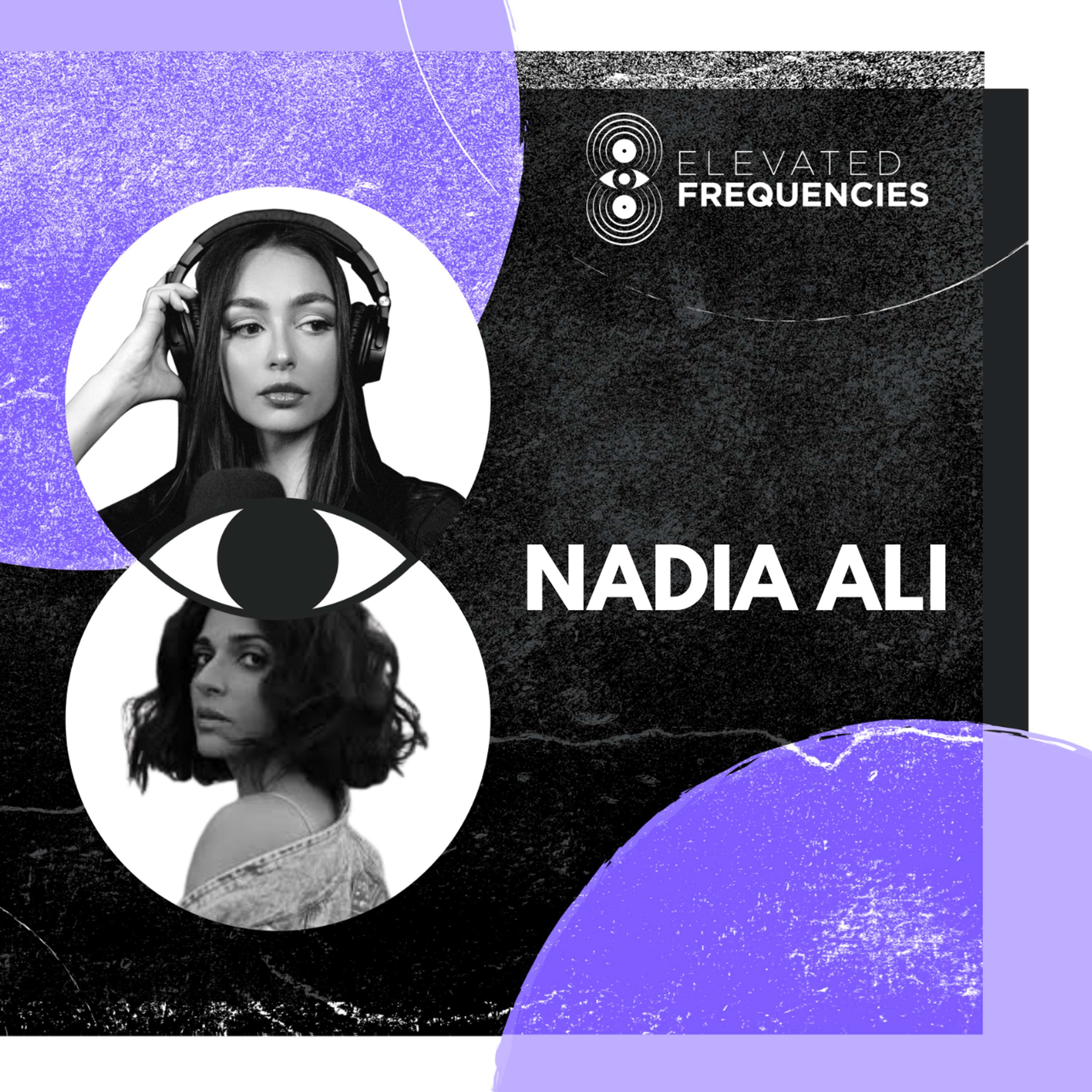
Dance Music's Collaboration Crisis: A Candid Talk with Nadia Ali | EF EP 74

 Spotify

 YouTube

 Apple Podcasts
In this powerful episode, dance music icon Nadia Ali—the voice and songwriter behind explosive hits like "Rapture" and "Pressure"—breaks her silence on the industry's biggest blind spot—the lack of recognition for singers, songwriters, and collaborators who help create electronic music's biggest tracks. With 23 years of experience and countless chart-topping anthems, Nadia shares candid insights about collaboration, credit, and creating authentic art in an increasingly individualistic scene.
From her unexpected start as a Versace executive assistant to becoming one of dance music's most recognizable artists, Nadia reveals how the industry's "bro culture" affects artistry and why a more inclusive approach to recognition benefits everyone in the scene.
Key Takeaways:
- Why proper recognition of singers, songwriters and collaborators is crucial for dance music's future
- How cultural differences shape attitudes toward collaboration in the industry
- The real impact of social media on artist recognition and relationship-building
- Why treating artists as transactions hurts the creative process
- Practical ways producers can better celebrate their collaborators
- How to maintain artistic authenticity in an ego-driven industry
- The importance of building direct relationships with your audience
Ready to level up your music career with more industry insights? Join us at Chicago Music Nexus, where you'll connect with top professionals and learn cutting-edge strategies for success. Reserve your spot now: www.chicagomusicnexus.com
Want personalized guidance on implementing these strategies? Join my artist development program on Patreon for exclusive content and direct access to industry expertise: https://patreon.com/oliviamancuso
Don't miss this rare, candid conversation with one of dance music's most influential voices. Hit play now to learn why recognition, authenticity, and collaboration are key to creating lasting impact in electronic music.
Video Editor/Audio Engineer: James Fixx
00:00 - Introduction to the Conversation
01:52 - The Importance of Collaboration in Dance Music
05:16 - Nadia Ali's Journey in Dance Music
09:31 - Transitioning to a Solo Career
12:52 - The Impact of Rapture
16:18 - The Role of Vocalists in Dance Music
20:07 - Recognition and Credit for Collaborators
23:28 - Gender and Cultural Disparities in Dance Music
27:23 - Embracing Individuality and Self-Acceptance
28:52 - The Evolution of Music Marketing in the Digital Age
30:15 - Navigating Social Media as an Artist
35:26 - Celebrating Collaborators in the Music Scene
39:04 - The Impact of Bro Culture on the Music Industry
43:46 - Authenticity vs. Fame in the Music Journey
47:10 - Building Meaningful Relationships in Music
51:22 - The Importance of Patience and Self-Reflection
0:00 When something feels like someone's trying to extract something from you without trying to offer anything in return, like look at that as a an indication of what the agenda is. You know of this person? What's up guys, Happy Thursday. I am equal parts thrilled and humbled to be sharing with you my conversation with the legendary Nadia Ali. Now, if you've been in dance music for any amount of time, you know her voice from massive hits like Rapture or Pressure or Feel So Good.
0:57 I mean, her voice is literally the reason why I stood in my bedroom as like a 14 year old imagining myself finally getting to go to Excalibur in Chicago and then it shut down. So I never had the chance. But today we are diving into something really important that affects our entire industry. We all have a stake in this, and that's the lack of recognition for singer songwriters and other collaborators in dance music. Now, Nadia brings up some crucial points about how our scene has become increasingly individualistic, especially with the rise of, you know, this celebrity DJ. I'm using air quotes here. Whether you're a producer, ADJA, singer-songwriter, this conversation will make you think differently about collaboration and credit in our industry.
1:48 Let's dive in. I'm so excited to have you on and I can't wait to hear directly from you a little bit about your back story and how you got into dance music. But I've invited you on for a very important reason today. So I want to know before we get into this, what is something that you hope that the producers listening to this show take away from this conversation today? Producers as far as the little rant I went on and my. Yes, a very important one. Well, first to say that, you know, I I love producers like we're all producers. You know, I produce my own vocals like we're all in this game together.
2:31 So I have no like beef with producers. I think the culture overall in dance music is very DJ centric and that's understandable because they're playing the records, you know, when we're dancing. But because the scene became so much bigger than just DJs, you know, you know, it always seems to me that the songs that do the best are the ones that have like good vocals on them. And it's surprising to me that there is not more celebration of that. And I mean, to be honest with you, I, I feel very, very well loved in this industry.
3:13 Like, like overall, I feel super appreciated and I've been super blessed from the beginning, but not everybody has that same experience. And I get frustrated sometimes too, you know? So I just kind of wanted to speak in behalf of people that maybe have experienced that, you know? So yeah, and it's really important for a voice like yours to be able to speak up for the vocalist entering the industry. Your music, your voice is what made me fall in love with dance music. So this like this to me is insane. It's insane so. So, well, let's pause for a second. That's incredible to hear.
3:58 I'm, I'm always blown away by that. Like you know, it it, you always assume, like you know, your family is going to support you, your friends are going to support you. And I'm I'm lucky and I have that, but it's just something different when like a perfect stranger says, you know what you did like impacted me that that is that's a privilege. Yeah, yeah. And on the and on the other side of the coin, I mean, I'm so honored to be able to ask you questions about how you got started. You know, I was SAT the first time that I heard Rapture. And I remember paying for it on Apple. It was iTunes.
4:50 We were paying, you know, whatever, 129 for a song. Let's start from the beginning. Did you know when you produced that song as IO that it was going to be as big as it was? Absolutely not. First of all, I mean, I should say that there's an element of being an artist, you know, and before you quote, UN quote, become an artist professionally, you always dream about what it might look like. And, you know, for me growing up in New York City as an immigrant, like my, my heroes were like Madonna and, you know, Michael Jackson, Whitney Houston, Mariah Carey, You know, it wasn't until the 90s when I was a teenager that I was like, oh, wow. Like there's other genres of music out there. There's hip hop, there's grunge music, there are like there is this whole other scene of like house music. Like how did I I got into classic rock. I got into so much music as a teenager. So it was kind of like just a discovery phase and I didn't really have time to envision what my dream career would look like.
6:21 I was just like hungry to be a part of it, you know? So I was really lucky that when I was 17 years old, I was working at this company called Versace. And I was working with this older woman. And she was this classically trained singer. And she always used to hear me sing in the office. And she was like, you know, I, I work with this producer sometimes and he needs like a young girl to do a demo for a song. And I was like, Oh my God, please give me that opportunity. Oh, my goodness. And so in the beginning, you're just like, so grateful to have the opportunity to think. So there's just like this sense of wonder and this excitement and this, you know, dreaming that happens. And you don't realize, like, you know, it's a business at the end of the day and or at least like selling music and promoting music is a business.
7:25 It is. And so I think as much as I imagined, like, oh, what it might feel like when, you know, people hear my song for the first time, I don't think it really hit me until like, I heard my song on the radio. I was like, what? What is happening in life right now? It's got to be surreal. But did you? So you said you were working for Versace in fashion. Yeah. So no, I was actually working as an executive assistant, which is a glorified secretary and. And Versace. Yeah, it was. I mean, it was everything.
8:06 It was like, you know, on 5th Ave. in the late 90s. It was right after Gianni Versace actually was assassinated, and the company was, you know, super luxurious. And I was 17 years old. So I was like, Oh my God, like, how did I hack the system? That's what it feels like. My whole life I feel like I've been hacking the system. That's amazing. That's amazing. Well, that's such a like, that's when you come from a place of gratitude that that is what it feels like, right? It's like a place of abundance. And yes, I I love that. Yeah, I was. I was too young to go to the clubs yet when I heard rapture. But I would close my eyes and try on my club outfits, AKA what I could put together from limited to and just envision myself eventually, someday and it and thank God it's still played all the time today.
9:05 So I did. I did get to have that moment that I dreamed of. So that was that really puts you on the map. But you, you ventured into a solo career after that, right? What, what made you do that? And why did you decide dance music was your space? So dance music was my space because I lived it. I breathed it. I went to clubs since I was 15 and 16 years old. I knew what it felt like to hear somebody sing and dance and like vibe off of that. You know, like I I had incredible examples of these kinds of songs from, you know, the age of like 11 and 12 years old onwards from like CNC music factory to like CC Penniston's finally, you know, Robin S show me love like amber, This is your night. You know, all of these Euro house songs that were just, you know, monumental to me.
10:13 So I lived and embodied that in in my DNAI think. And so when I had the opportunity to work on music, we were actually not working on dance music. We were working on like pop crossover music. And so in that moment when I was working with that producer, we were working on all this pop music and I just was like, can I, can I do like a dance song or try it, you know, like I want to see what my voice would sound like on a faster tempo. Like, what would it sound like on 125 BPM?
10:54 Like, you know, it's cool. Like I love like me some, you know, hip hop beats and all that. But I like I want to hear what my voice sounds over this like pulsating rhythm. And, you know, again, everything is meant to be. And so that that producer's best friend was one of the most influential club promoters of the time in New York City. And he was like, let her do the dance song. Let her try the dance song. And that dance song was rapture. And so it just was, you know, it's just all the stars aligned. And when I wrote it, I wrote it so quickly, I didn't even have lyrics yet, you know, So I just had the La, La, La, La, you know, So I just told him I was like the chorus and then La La. And then they were like, yes, yes, finish it, finish it. So I just went back, finish the rest. And it just, you know, it was one of those things, a series of like, really like perfect things happening. It got remixed by two very, very relevant and like really cool producers at the time.
12:05 That was John Aaron, Stefan Kay and Deep Dish at the time. I mean, they were like, you know, all the people that everybody know now that that was, they were one of the first ones to do their things like that. And yeah, it just got remixed by the right people, got sent to the right radio shows, circulated in the right venues. It started off as a club hit before it was on radio. So that was what made it very credible because, yeah, it just, it was just circulating in in the best way that, you know, a song could really, you know, have legitimacy.
12:47 So was that the moment you knew you had to quit your job at Versace? Yeah, I mean, no, I had already quit my job at Versace. So I had been working there from 1997 until 2000. And in 2000 I had gotten this other job at Ford Models doing the same thing. The executive assistant and I just one day decided after going to the Winter Music Conference, I was like, so corporate America is not for me. I will not be doing this other thing. I just want to like dive into music. And because I still was in touch with that woman that worked at Versace, she's the one that introduced me to this producer. So. It's got to be such an amazing feeling to to know that your songs are still played, remixed. I heard it this weekend and I was like, Oh my God, I have to get here on Monday.
13:41 Oh my God, it's got to be such an amazing feeling. It's an incredible feeling. I mean, it is it? It's almost like an out of body experience. I mean, sounds kind of woo woo, but it really feels like you're just like witnessing a simulation of some kind. Like it, It's like, whoa, that's my voice. Like sometimes I even like look at my own videos of me singing something and I'm like, I'm like, I'm 5 foot two inches and somehow like, I have this, this, this voice and I, I just don't put sometimes it just feels like you're watching it from the outside and not like the person doing it.
14:26 And I think that's a good place to be because I think when you get like, way too caught up in the hype of what your art is, you can kind of be a little bit detached, you know? Yeah, and I'm and I'm all about the woo woo, so. Me too it. It was it was so cool to see you come across my TikTok feed. Love TikTok for better or for worse, but I think it's a a great place to start conversations. I've certainly started my fair share of controversy. Things like I I talked about potlucks the other week and I got the Internet in a frenzy.
15:09 Oh, that's cute. About my how I don't like potlucks, but all that to say 'cause you don't you can't eat from everybody's kitchen. You never know, OK, never you never. So all that to say, TikTok is such a great place to to start these conversations. It's and it's, I didn't know that you were posting on there. I mean, I've seen videos of your performances and stuff on my throwback like accounts that I follow. But that's what prompted me to reach out to you because you brought up such a great point about how vocalists get credit. And I want to dive into it because I think it's this more pervasive and elusive thing. You're talking about the culture, right? We're not most of my audiences, DJs and producers. So they understand how, for example, vocalists and other collaborators get paid it and credited. It all depends on your agreed upon structure. If you're in a sample pack, that's not what we're talking about.
16:05 We're talking about kind of something bigger and it's and it's about the the credit. So can you talk to me about why you decided to make that video? All right, I'm going to try not to get myself into trouble. Don't you? Yeah, as much detail I. Mean there's a part of me that's like, you know, that's thoughtful and conscious and, and better than sometimes my emotions. But, you know, look, I'd be lying if I said that I don't generally feel like I'm in a privileged position for the sheer amount of years that I've been doing this.
16:52 I mean, like the fact that I still get to make music with really relevant, cool, creative artists till this day, 23 years into my career is, you know, it's, it's something that I'm really, really grateful for. But at the same time, if we're talking about, you know, what is proportionate to the amount of contribution that I've made to this scene. I mean, I've had multiple songs do really well. I also think I I mean, first of all, being a brown woman in the scene period, in show business period.
17:37 I was one of the 1st and that was already hard in itself to get away from my own cultural baggage that, you know, girls in my culture may be a lot more passive and a lot less willing to put themselves out there. And it's not because they don't want to, because clearly like there's so much talent in in that in that part of the world, but it's more of just this this thing that, you know, within it's show business. I think not just not Just Dance music.
18:17 I mean, I think in pop music, you have a lot of women that are in power and recognized for their talent. But I think in dance music, you just have a lot of people who are just people who are socially awkward behind a computer making some music and finally get some limelight and forget that there were a lot of people that were involved in in them coming up. I've worked with a lot of people. There's a lot of really good people in this industry and I I know a lot of them and I'm friends with those people. But I mean, the amount of producers that I've worked with that have treated me like a transaction is more so the case than the people that have like treated me with like this awe and, you know, excitement of working with me.
19:10 Like, I feel like I've definitely been used for my voice and my songwriting. And their careers have, you know, skyrocketed because they're up there DJ ING in a party and versus like I will have, you know, a 5 minute song in a set, you know, but that 5 minute song. That's part of the set. No, I mean, it's like, you know, like, don't underestimate that shit. You know, like it was important. Yeah. And the reason why I, this is so important to talk about specifically to my audience is because most of them are still bedroom producers or they've had a little bit of success and they're looking to level up. And I want that to them to hear this from Someone Like You, so that maybe.
20:07 When they're making their next track, these are things that they'll consider. It's important to keep the conversation alive because I think that because when they see their peers or people they look up to acting a certain way, it's just easy for them to follow that path. And so they need to, they need to hear the other, the other side, that your, your voice is not an accessory to their success. You are a human with your own talents, your own dreams, your own goals in this industry, just as every other vocalist is. Well, first of all, you're amazing because it's very cool to have, you know, people like yourself who understand the contribution that we as singer songwriters are making. I have this like, love, hate relationship with vocalists because it's like I do more than vocals. You know I write a whole story for you to live. In.
21:13 And don't diminish my talent and call me a vocalist like I am an artist. I sit there in front of the piano and I like pour my emotions on these on these songs. Like what do you think people are connecting with your like, no, like sure, for a hot 2nd. But like what they're feeling is something what they're listening to outside of the set that you just played is like, you know, those words over and over again on their streaming sites. Like, so there's this notion that yeah, yeah, we're, we're, we're, we are appreciated to a certain point, but not celebrated, you know? It's a really important distinction you just made and I'm glad you brought that up because vocalist sounds like part of a song and artist is the person who creates the art and so.
22:15 I, I have to fight for that a lot in my deals. So this day I'm like, why are you treating like I literally just dealt with that last year And that's, you know, that says a lot. I mean, again, I have worked with people that are just like you, you know, like give credit where it's due. And it's funny. It's, you know, some of the biggest artists in the world are the easiest to work with because they're, they, they know what it took to get to that point. It's a lot of the times it's like the people that are like trying really hard that lose sight of like, OK, like you're working with this, You know, this, this artist wrote lyrics. She came up with a melody.
23:05 She came up with the words. Yeah. Yeah, wow. I know this is going to give the people listening a lot to think about. And you mentioned this earlier, being a Brown woman in dance music. I know I don't have to ask you. I know that there are gender disparities at play here, cultural disparities. Most singers in dance music tracks are women. Even when it's just basic lyrics, like it's just a repetitive phrase, whatever. Yeah, I'm talk. To me about how that's played a role in your opinion in, in this disparity of, you know, and lack of recognition. I mean, look, if you look at the statistics, 80% of the listeners for dance music are men.
24:03 Really. Yeah. What? That's crazy. Yeah, I mean, like, at least on my social media. Yeah, that's true. My social even even even if you look at my like my, my back end for Spotify and and Apple Music, like heavily male audience. It's true. I think they like the sound. I think they like the sound of a woman and they prefer that because, yeah, it's, it's, you know, it's attractive to hear, you know, I mean, just like for me, I like hearing like a really nice male voice, you know? Good point. Yeah. So because the audience is largely male, the preference is to hear a female. I think this is just my theory.
24:47 This is my theory. And so you want to hear a woman and you want her voice on it, but she's not as important as the DJ and she's not as important as the person who made the production. Listen, the production is so important. Like producers can make a song next level, like what I could play on a piano, like the right producer could take to, you know, like outer space if they have the right vision. But you know, again, again, it's a tango, you know, and takes 2. Yeah, sounds like what you're saying here is just we all have equal role, roles to play.
25:33 I mean, it's not always a 5050 or 20, you know, it's not always even. But they couldn't do what they do without you and so. As something else that I wanted to inject, I'm sorry about the whole cultural thing about being, I'm going to call myself an exotic woman because I don't, you know, I'm not blonde. I don't have blue eyes. I, I, it took me a long time to understand that even that was special, that I wasn't like everybody else, that I didn't sound particularly white or particularly black.
26:17 I think that's what created this frenzy around the rapture. Like the vocal was really hard to point out. Like, what is this? Does this sound soulful? But it's not like a gospel style vocal. It sounds easy to absorb, but it's not like it's not pop music. I don't sing like a pop artist. And I think the fact that I am, you know, exotic is what has helped me ultimately. And I may have looked at it as, like I said, at some point in my life, like growing up, you know, as an immigrant in New York City, like even amongst the immigrants, I was still different because I was not Latino. I was not black.
27:13 There was a lot of Caribbean, West Indian people that looked like me. But we're not culturally from like Pakistan, you know, they were from Guyana or Trinidad. And and even then I was not like them. And even amongst my own people, amongst Pakistanis, I was not the conservative girl. So it it just, I've always been on the outside and it was challenging like at times, but I'm I'm comfortable with it now. You made it your superpower. It Yeah, yeah, I think I did. I think it took me a long time to get there, but I realized that I got there and it feels good to be there. That's awesome.
27:58 That's awesome because I, you know, there's lots of different people who, who listen to the show and, and reach out to me. I do, I do some coaching and, and something I hear very often is that they do feel different and they're not comfortable being themselves just quite yet, you know, out to the world when they're presenting because, you know, now talking about how you have to market yourself now versus, you know, 10-15 years ago is different with social media and they're just not comfortable putting themselves out there like that. And so it is, it is a journey of self love and, and I love that you've, how much you've embraced it.
28:39 It's, it's amazing. So marketing music and just talking about your music is, like I said, a very different process today than it was. I mean, dance music is a young genre, first of all, I mean, it's compared to everything else, but it's very, it's very different today. How, how you, how you market it, what you have to do. And so in my opinion, I think there's even more opportunities to celebrate your collaborators. Yeah. What do you think? Well, you bring up a really great subject. Let's talk about the subject a little bit, because social media promotion was the bane of my existence for a while. Like I resented it.
29:29 I'm actually going to talk about that on my social media, ironically. About how much like how daunting it felt, how overwhelming it is, how frustrating it can be. Just also like, you know, I'm still old school in the sense that I believe in being authentic and I believe in not being cringe. I know there's a whole generation that has zero problem with being cringe. I still like, I still have a little bit of that. So I have to find a nice balance of like what feels like true to me and doesn't make me want to vomit when I look at it, you know, So I have been really blessed.
30:16 I've been working with someone actually a peer of mine in in the industry who's really changed my whole philosophy on social media and the opportunities that we have as artists that we've never had before. I consider myself an entrepreneur as much as I consider myself an artist. And as an entrepreneur, there is a phenomenal opportunity to put yourself out there and people discover you for not just your music, but just for you being a human. I mean, you're talking about TikTok. I had posted the reel on Instagram first, which was on a Friday, and it got a lot of traction. I guess it resonated with people. And then I had forgotten that I need to post it on TikTok because I'm still new on TikTok and I posted it on Sunday. So I posted it on Friday and Instagram Sunday, two days later on TikTok.
31:20 And holy, holy moly, like talk about a wildfire. Like this was like it. I went from I think like 1000 followers to like 9000 followers the next week, like from this one video, right? Because the thing over and over again was like, Oh my God, I didn't know you were on TikTok. I didn't know you were on social media still. Like The thing is that it's a double edged sword. It's like if you don't put yourself out there, no one will remember you in this like excessive hyper content era, you know, you'll just drown in the Whirlpool.
32:06 And if you want to, if you want to connect, right? Because we do want to connect as artists. We're, we're not just recording this music and just like playing it for our moms and dads. We want to play this for people to have some kind of connection with it. And so, you know, back in the day, you had to deal with a label, you know, a PR team, what you call it, management and agent, all those things. And now it's like, no, dude, I'm here sitting in my studio in so and so place, and you're in Turkmenistan and you get to come into my world.
32:49 I can be sitting in front of my piano, in front of a camera, and you can watch me, you know, from freaking the space shuttle. So I think that there's a huge opportunity in marketing yourself, and I think it's critical. But that was not your question I think. I think, yeah, I'm glad that you explored that because it's the topic that comes up more than anything with everybody I interview. How it is a double edged sword and like where I've gotten with it because I can, I, I'm an entrepreneur, I'm a, a business owner. I, you know, do other things is that it's not good or bad.
33:29 It's neutral and it's just about how I look at it. And some days I feel good about it, some days I don't, but it's there and I have to do it. So I I've actually. Changed. I actually changed my entire whole stance on it. I actually went from saying I I have to do it too. I get to do it. Yeah, it's key. It's key. You gotta get up everything in life like, oh, I, I, I get to walk my dog like, 'cause I have the, you know, sometimes I have to do that with, if you're having a shitty day, you have to do that with like the simplest things. It's it's a great perspective shift. Yeah, it is. And also, and this is me coming off of a very, very, very, very frustrating morning so far because I literally was on the Instagram app about to upload something and I just had all of these like errors, like not because of what I was doing, but because of the app just being glitchy. And I literally spent an hour and a half and I didn't even post what I was going to post.
34:39 And you're like, I get to do this. I'm like. What a privilege. Yeah. That's so fun I. Break my phone because it's, you know, it's been more and a half of trying to do something. I mean, if I tell you what it is, I mean, we're recording right now. I'm not going to get into it, but yeah, so it was one of those days where I was like, I really, really, really, really, really resent those today. Yeah. Well, thank you for still doing this show. And I would have never known, I would, I would have never known that you had that kind of morning. Thank you, shower really helps. Yes, yes it does. So, OK, so talking about social media, like what are some simple ways that artist can, we're talking DJs here, DJ, producers.
35:24 How can they celebrate those other artist collaborators? Like what are simple? Is it like in, in, you know, using the tag, the mention feature, What can they do? Yeah. I mean, easy shit, you know, like tag the artist, let them know that you're working with an artist that has an Instagram page. You're going to post something, you're going to talk about the song, talk about what it was like working with this person. If you didn't work with the person and you just got a vocal, tell them how that vocal felt to you. You know, the thing that people don't understand is like, we have this tendency. I think it's a Western cultural thing. I'm, I'm sorry, I'm going to like call it out. Do it.
36:08 I don't know. I think in in our part of the world, and I mean like the Eastern cultures, like we, we have a village mentality. Yeah. And like, I shine, you shine. We all shine. And I think Western culture is very much like me. Centric. Hyper individualistic, yeah. Individualistic I, I, I and yeah, that's part of it. It's, it's like, it's like I did this, I did it's and it's, again, there's, there's enough, there's enough brown people that make this mistake too. I've seen it over and over again. So like no one's immune to it.
36:48 I think it's just insecurity at the end of the day, dude, if you're doing well, celebrate the celebrate the people that helped you get there with a simple tag or a simple mention. But beyond that, I want to tell you something else that again, I have to walk a fine line of not I don't want to sound like I'm shitting on people because again, you know, these people have contributed to my success by creating remixes of my songs that have done really well. But like this whole like bro culture of like let's hang out with Bros, you know?
37:34 And it's like, dude, first of all, like you do you and you do your bro thing, sure. But also like just this, it feels so narcissistic sometimes, you know, this whole like I am the end all be all almost God like dude up here on stage and you know, like this whole like feeling of like, yeah, sure, cool. Yeah, you were that artist that did that vocal on my biggest well known remix. And I just, I just don't acknowledge you. I I like, I've never asked to, you know, have a conversation with you, even talk to you about the song.
38:19 Like it's so transactional, so transactional. It it this scene is so transactional. And I don't know if that's the case in other genres of music, but God damn, in this scene it's very transactional. I haven't experienced it on the same magnitude that you have, but I often wonder, if I, you know, was a man, would my show, would more people listen to me or would my show be further along? No, you are. You are, You are perfect the way you are. You don't need to be a dude. Thank you and I don't want to be. I very much like being a woman and girly things, but it's, you know, it's it's something that the bro culture is pervasive and it's gotten worse since the scene has grown and it's. And also also like, good.
39:14 Like, sure, whatever you want to be that dude, you want to be that. I mean, like, the whole cliche of like, I just had a DJ gig and yeah, on stage there was all these, you know, people around me, we're all doing shots and the after party and then the other after party. And like, all the girls that are like, willing to sleep with them because they're DJs. And it's so ridiculous at this point. And it gets to be so, I don't know, repetitive and and loses its I know so many DJs that have lived that culture and are completely burnt out, burned out from us. It's not are also burned out from it. It's not just, you know. Yeah, it it's not a sustainable lifestyle.
39:58 And something I always talk about on the show is is about your brand. And when you center yourself as the hero in your own story, it turns people off. You need to make. Your clients, your customers, your listeners, the hero of this journey and you as their guide. And when you do that, that's how you create real community, of course, but but you know, I get pushed back. Well, it's like, well, such and such DJ just post videos of him with all these hot girls in the booth at space and you know him on yachts and whatever. I'm like, OK, but that, like that is so like you said, they get burnt out too.
40:38 And that is that has an expiration date. You can't do that forever and you can't make that your brand. I think people are getting bored of it, for what it's worth. Well, I think that's refreshing. I think also I will say, you know, within dance music there are so many genres. Like I will tell you that there are so many nuanced differences. Like tech house music has its, you know, has its thing, trance music has its thing. Then there's like melodic house music. And I've noticed, you know, I, I'm really great friends with Sultan and Ned.
41:18 They're basically, they're like my brothers Sultan and Ned Shepherd have been doing music for a long time as well. And they're more in that melodic or progressive, I don't even know what. It's all genre bending at this point. Yeah, at this, at this point, no. But I will say like it's like that whole like lane 8 world and all those other guys. It's it's not as it's not as bro Y like. Yeah. It, it feels a lot more like even going to their concert, I noticed that the audience was like completely different from like a tech house party, completely different. So even amongst like dance music, there are so many genres. And if you're a DJ producer and you don't like the scene, just discover another or don't participate in it. Like, do you?
42:09 Like it is so special to have your own thing and to not participate in what everybody else is doing. Like I just wish that more artists understood the magic of being unique and not a follower. That's the sound bite right there. I love that. I love that. What do you think is at stake if we don't turn this ship around and we don't start to have a more inclusive culture of recognition? It turns me off. Like it turns me off when a DJ producer is all about himself and only wants to work with me because, you know, he wants like this really great vocal song and he wants to put my name on it. You know, that's like that's like, you know, it's very similar to dating situation or it's like you just want to, you know, add you don't want to have the whole relationship outside of that.
43:22 Like I like I'm here to make art. I'm not here to become famous. If I wanted to become famous, I would have made such different decisions in my career. Like I'm not here for fame. I am not here to I'm not here to make statements either. I'm not trying to be a hero. I'm just trying to live as authentically and be as true as I can to what I get downloaded all the time through creativity. Like it can't stay inside of me. It always has to output somehow and I put it into music. And what ends up happening, I mean, for me personally is like I get turned off by the scene.
44:13 And like, that's exactly what happened to me actually in 2014 and 15 when all of my songs were like, you know, doing their their thing. Songs like Rapture, songs like Pressure, songs like feel so good. The songs that I've done with so many different artists at that time, like I was completely turned off by that industry. Like I new dance music before it was EDM and EDM is like, I mean, EDM is a a general umbrella because it stands for electronic dance music, but EDM, the genre of music was the epitome of bro culture. And yeah, it was the epitome of like, I am this, you know, God, like DJ on this stage.
45:05 And I have hundreds of thousands of people, you know, constantly coming out to my shows on the weekends. And it's, yeah, it, it really, it turned me off personally. And who cares what I think? But as somebody who contributes to the scene, I just didn't feel like, OK, like I'm here, I'm trying to do my thing. I'm trying to, you know, contribute what I do. And there's no sense of appreciation or a, a, I should say, a disproportionate sense of appreciation. And it turned me off for a long time. And I stopped working with a lot of these people. And it was great to take a break. And now I'm getting back into it. But even then, like now, what does it, what does it mean? What does it translate to?
46:03 Well, it just makes me feel like, you know what, like clearly my listeners love what I do and I kind of want to just have that relationship with them directly anyway. So if it means like me participating less in that toxic scene and so be it because I I, I have to stay true to my art. At the end of the day, I'm a martyr when it comes to music and just, you know, also I understand my mission very, very clearly. And that is express what needs to be expressed in the way that it comes out of you through your filter. My filter is very specific.
46:51 And I'm always going to try to, you know, pour in as much, you know, authenticity as I can to, to my craft. Wow. Well, it's important because you need, DJs will always need willing artists who sing that everyone, you know, has to be a willing participant in this. And if you are someone that nobody wants to work with, I mean, that limits your options. So I think, I think that answers the question beautifully there, there there is limited opportunities for people who are Divas, self-centered, whatever that's, that's, that is what's at stake.
47:32 Well, what's also at stake is like, OK, cool, like you, you consumed whatever you needed to consume from this artist that brought this beautiful piece to you. Now what? Like you just, you just going through, you know, multiples and multiples of that until, you know, again, it gets to the point where it's like, you know, I, I like what's, what's so beautiful about doing this for decades now is that I have so much hindsight vision. Like it, there's, there's so much I can see clearly. And I've just seen so many careers do this, like so many do this because of fat egos and, you know, just this like inability to like share the love amongst the community.
48:23 And it, I mean, I've seen it so many times. It's, it's, it's, it's comedic at this point. So that's what's really great about, you know, having done this for a long time. And I think it's a privilege to age in this industry. And also just in general, like, you know, because there's so many egocentric characters in the scene, it just makes me feel like, OK, well, let's see what else is out there. It's like dating a bunch of like, you know, a certain type of guy for a really long time and then realizing like that type of guy is not great. And you just start to explore what else is out there. Let me let me talk to artists that actually love sitting in a room with me writing music. Like, why not invite that more into my life? And I just I get into the studio more with people that I really enjoy versus just like, yeah, send me a vocal on this. It's, you know, that whole transactional thing. It's like I just like, I just really like where I'm at in my life where it's it's very clear to me that there are some people that are going to treat this as a means to an end and others are going to treat this like a really, really special opportunity.
49:36 And you know, I just experienced that with with Camel fat, like these guys are stand up individuals, like super, super, lovely, humble guys have been in the scene as long as I've been in the scene. We're the same age, pretty much been through all of the different phases. And, you know, and it was, it was a great privilege for them to recognize my talent and for us to get into a studio space where there was so much mutual respect and appreciation for what we do. And we created a phenomenal, you know, phenomenal piece of music. Wow, well, I, I can't wait for that. And I, I always love to hear good reports about artists, especially ones that you, you know, are, are a fan of and I'm a huge fan of Camel fat.
50:29 And so just to hear that they're good people like they're. Really good people. It's amazing this has been such a privilege to talk to you. Thank you for sharing your time, your wisdom. I know a lot of artists are going to benefit from hearing this. Oh. You're so sweet. And I again, I feel the need to say I'm not bitter, like I'm really not bitter. I like my life is good. My life is so good. I love making art every day. It is such an incredible, incredible gift that God has given me. And I, you know, I don't hold bitterness towards anybody in the scene.
51:10 I know people are just like in whatever they're in because of their set of circumstances. Like that's, that's all of us, Like that's, that's all of our journeys. But I really feel like for the people that want to be in the scene, particularly singer songwriters that like may look up to me, I, I think it's so important to stay true to what feels good in your, in your, I don't know, in your being as far as like, you know, when people are treating you a certain way, like check in with yourself all the time.
51:53 Like, how is this feeling like when something feels like someone's trying to extract something from you without trying to offer anything in return? Like look at that as a, as a, an indication of what, what the agenda is, you know of this person. Amazing, amazing advice. Patience, patience. I wish I had more of that. So much patience. I don't have patience, but I do, I have deep patience. I don't, I may not have momentary patience, but I have deep patience. And I think that's the patience of the soul. You know, it's like your soul for it to fully come into its, you know, into its full, you know, blossoming phase really has to has to wait a while.
52:43 And but it comes. I think it, I think it comes for everyone that just stays, stays with it. I love it. I love it. Thank you again. You're so real. Unbelievable to talk to you. Well, what an incredible conversation with Nadia Ali. I'm just again so humbled that she granted me so much of her time. Her point about dance music's bro culture and how it can push away talented artist really struck me because we've talked about this before on this show. It is a cliquey scene, and producers and deejays have to remember that these singer songwriters are not just accessories to your success.
53:32 They are artists with their own dreams and creative visions, and they also have autonomy. I love when she said, you know, I shine, you shine, we all shine. That's the mentality that we need more of in dance music. So if you're working with other singers or other collaborators, whatever it may be, take Nadia's advice. Celebrate them. Tag. Them in your post share their stories. It's literally free. It's so easy A little recognition goes a long way. I hope you enjoyed that conversation guys. As always, we're continuing the conversation on my Patreon. I have that LinkedIn, the show notes. This is a super busy month with Chicago Music Nexus. I think by the time this is released, just a week away. So if you haven't got your ticket yet, especially if you're local in Chicago, do not delay on that because by the time this comes out, I'm not sure how many there will be. We are almost sold out.
54:34 As always, thanks for listening. Stay elevated and I'll talk to you next week.