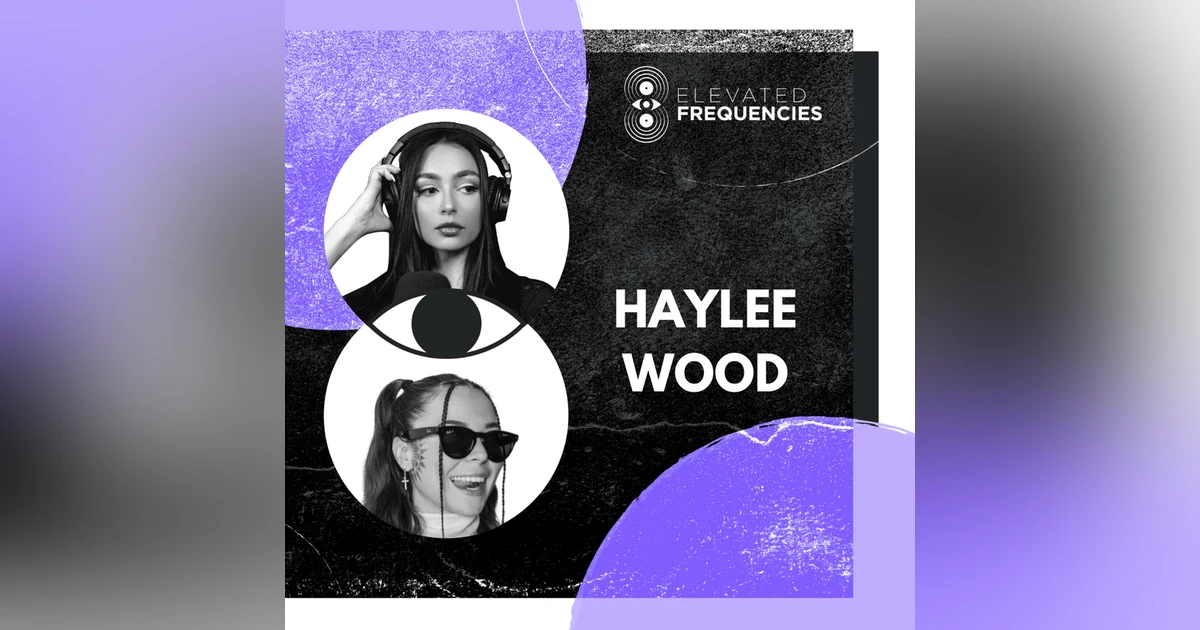
How Pre-judgement Affects All Artists (And What To Do About It) with Haylee Wood | EF EP 82


 Spotify

 YouTube

 Apple Podcasts
She was mistaken for a groupie at her OWN SHOW.
When we pre-judge artists - for their gender, age, appearance, or background - we all lose out on potential innovation and creativity. This week's guest, Haylee Wood, shares how she went from making bedroom DJ sets during COVID to becoming one of dance music's rising stars, and why maintaining authenticity while navigating industry challenges has been key to her success.
Whether you've been pushed aside, underestimated, or had to prove yourself repeatedly, this conversation offers practical strategies for building confidence and turning challenging situations into opportunities for growth. Because when artists have to spend mental energy proving they belong somewhere, it takes away from the energy they could spend on their art.
Key Takeaways:
- How to maintain confidence when facing industry prejudice
- Practical strategies for commanding respect in professional situations
- Building authentic relationships while maintaining boundaries
- Converting challenging situations into opportunities
- Why creating inclusive spaces benefits everyone's creativity
- The importance of finding champions in the industry
- Balancing authenticity with professional growth
Ready to level up your music career? Join my artist development program on Patreon for exclusive content and direct access to industry expertise: https://patreon.com/oliviamancuso
Follow Haylee's journey on TikTok: @itshayleewood
Stop letting preconceptions hold you back. Hit play now to learn how creating space for authenticity can transform your career in electronic music.
Connect with me on Instagram: @oliviamancuso__
Video editor/audio engineer: James Fixx
00:00 - Introduction to Challenges in the Music Industry
03:01 - Hayley Wood's Journey to DJing
05:47 - The Importance of In-Person Connections
09:03 - Navigating Streaming and Authenticity
11:57 - Experiences of Prejudice in the Industry
14:51 - The Impact of Gender on Professional Relationships
18:05 - Creative Output and Comfort in Collaboration
20:55 - Overcoming Industry Stereotypes
23:52 - Building a Positive Reputation
26:50 - Support and Community in the Music Industry
29:53 - Conclusion and Key Takeaways
0:00 And then the promoter comes up to me, go, what happens? To me about my shoulder toys to. Me and goes, what are you doing? That's not for you, That's for another artist. Yeah, Haley would right? That's me. Happy Thursday, everybody. When I started Chicago Music Nexus with my business partner Matt Sherman, I was excited to help artists succeed in dance music.
0:47 I still am. But what I didn't expect was to be completely excluded from some PR coverage left out of some social media posts from attendees, and have people assume that I wasn't an equal partner despite putting in equal work and monetary investment. And I've stayed quiet about these experiences because, you know, overall, Chicago Music Nexus has been one of the best experiences of my life. But you know, I'm worried that speaking up will only make things worse, or make me seem ungrateful or like I'm complaining. But then I came across a TikTok a couple weeks ago that stopped my scroll.
1:31 It was Haley Wood, an incredible DJ, and she was sharing a story about being screamed at by a promoter who assumed she was just a groupie and not realizing that she was actually slotted to play that night. And her video resonated with thousands of people, not because it was a complaint, but because it highlighted a bigger truth that when we prejudge anybody in this industry, we all lose out on potential innovation and creativity. Today's guest Haley went from making music streaming in her bedroom during COVID to becoming one of dance music's rising stars.
2:11 But success hasn't shielded her from being literally pushed off stage mid set by a tour manager who assumed she was just another girl dancing in the booth or having to constantly prove she belongs in spaces that she's been booked to play. And these stories matter not because we want sympathy or because we want to harp on men, but because every time an artist has to spend mental energy proving that they belong somewhere, it takes away from the energy they could be spending on their art. So whether you are a man or woman in this industry, this conversation is going to change how you think about creating spaces where artists can truly thrive. Haley shares practical strategies for maintaining confidence, building genuine professional relationships, and turning challenging situations into opportunities for growth. I hope you enjoy.
3:03 So I was doing my my research on you and I read that you actually started deejaying like around COVID times when COVID took all the venues away. So how did how did that happen for you before I? Ever was a DJI was actually just like in real life streaming like just like talking, being like stupid, you know, funny things like on the Internet and stuff. And then when COVID came, I was just a big raver and I was at home and I was just like so sad about no raids. And then that's when Insomniac had those, those raid at home things. And I was just like, this is so lame. Like I don't like this. I want to party. And then so actually at the time, the boy that I was dating at the time was like, you're a musician. Like I bet DJing isn't even that hard. And so he like just went out and bought me a little setup and I started like trying it out And within like two weeks of trying it out, I was like, wait, I'm actually kind of good. Like I kind of understand this whole concept. So it just kind of started like as a kind of for fun thing because I missed DJ ING or I miss seeing DJ's live and I missed breathing live.
4:12 So I was going to try to do my own like house party type of thing and then it shortly gave away and I was just like, no way. I think I want to be a DJ. So you were part of the community like before you actually became ADJ which is is a common thing. So did you have to go and like get your first real life gig after COVID? Yeah, yeah. I lived in Florida, so we were a little bit more chill on all the rules and stuff. So Brady's surely we started having like bars open and the clubs open again as soon as I happened, The one club that I went to, it's more of a bar, but it's also a club. It's called Elixir and Orlando.
4:57 I didn't really know what to do, but I went, I went to the like the bartender and that's the only club that I had seen that had like an official stage set up. Like there was tons more, but it's just the one that I had seen because I had just moved to Orlando from Miami. And I asked the bartender if she knew who was booking talent and she was like, oh, it's that guy over there. And I just went up to him and I was like, hey, like, I don't really know how this works, but my name is Haley and I just started DJ ING. I think that I'm good enough to play at like a club setting or something like that. Like, how could I get about performing here maybe? And then he was just like, oh, cool.
5:39 He was pretty nice about it. And he just told me to send him a mix. And then I sent him a mix that same night and he hired me for like a month out. That's awesome. So I, I love hearing those stories because like, I feel like people undervalue that in person approach so much. They think it's all about online presence, but you make a lasting impression when you talk to someone in real life and and by you following up like that night and like staying on top of it, you were fresh in his mind. So those are like critical things I always tell artists that they should be doing. Yeah, I mean, I, I before I was ever even thinking about being in the music industry at all, it was always like a small dream of mine to be in the music industry and somehow, but I was in physical therapy before, so like very professional person. So I just took that professionality into DJ ING in a way, because I was just like, OK, well, if I want to treat it like a job, it's going to be like a job where I have to go prove myself and stuff like that. You know what I mean?
6:46 Yeah, yeah, absolutely. Treating yourself as a business, that's like something I harp on with artists because it seems like counterintuitive to being an artist, but it's how you treating yourself like a business is how you make money. It's how you get gigs. It's it's definitely an important part. So, so and you're, you're streaming still on TikTok. I mean, I see it all the time. I join in. I vibe a lot of people have moved away from that now. I think a lot of people had like fatigue after COVID of all the streams. But I feel like yours is probably a great way to just stay engaged with people. What do you, what do you get out of the streaming now that you're like also doing it in real life?
7:28 Well, the whole reason that I started streaming in the 1st place was for money. Like I'm still up and coming DJ. So it's either you know, broke or another job. And I actually like I'm able to make a living off of just my TikTok stream. Like even without my my gigs, like in real life, like TikTok is like it is my main source of income right now. So but the best part about it is not really that. The best part about it is how much it grows in my other social medias and actually gets real people that actually like like me and fuck with me and my personality. So like go on to my Spotify and SoundCloud and my YouTube and listen to all my things because that's what I get out of it most is connecting with people I like. If you watch me, you can see I I talk to everybody that I possibly can.
8:31 I got my professional yapper Jack I. Love it, I love it, so am I. I have a podcast like What am I doing this for? This is a talk. I like to talk. Yeah, I'm right there with you and it's so smart because TikTok is a platform that values authenticity. I love like the story times because even yours, which we're going to get into, it's something where like if I see a story time and it's like 4 minutes long, I'm like, oh, this is going to be good. I can put my phone down and listen, but like do other things. I feel like that's like a very, it's a differentiator of TikTok. So like with your streaming, for example, it's like, oh, awesome, this DJI love is streaming. I can just put it on in the background and like clean my house or whatever. And so it's such a smart tool.
9:15 And then obviously the monetization features of TikTok are really great. You, I, I'm sure from this TikTok that you post that we're going to get into. You probably got something out of the creator fund just for that. Yeah, yeah, it's literally a dream come true for a little the amber like me. It's it's awesome and I I want more people to jump on board with it because not everybody uses Twitch, like unless they're like Twitch people, but I feel like a lot more people use TikTok and so it's just a great thing to explore. Yeah, there's a lot. Of stigma, unfortunately, I think to being a TikTok DJI don't care.
9:56 I'm a TikTok DJ. I'm still DJ in big events and I'm on TikTok so. 100% and I think I think the difference, at least for me, when I hear Tiktok DJ is you're a DJ that's just remixing like viral songs on Tiktok and capitalizing off trends versus using the platform as a place to share your art. You know, there's there's a difference and one thing that I think a lot of artists are afraid of because they don't see themselves as professional yappers is to like they're they're too scared to like show that vulnerable side of themselves and be real. Which TikTok really demands that authenticity. I came across your TikTok about what happened to you with the promoter in the club.
10:39 And why don't you explain what happened for the people who haven't seen it? Yeah. So basically I had a show that I flew across the country to and I was hanging out with the headliner of the show before the show happened. And then so I ended up going to the show like with the headliner and falling back to go get my friends. And when the promoter had originally met me with the headliner, because I was with the headliner, he just assumed that I was just like one of the groupies that was hanging out with the headliner. And then when I fell back and came back to the show with my friends, he then treated me still like a groupie rather than asking me who I was. So it was kind of like, it was just kind of like a funny thing to me because I'm just like, OK, well, I'm still here to play, and I'm still here to get, you know, paid. And I'm the one who was invited here. So it's like, it's hilarious that you're treating me like this right now.
11:43 So I kind of wanted to fuck with him back kind of thing and because I knew he was like just giving me the cold shoulder because he didn't know that I was one of the DJs, I let him kind of treat me like crap until the very end. I went to my table that he had set up for me and you know he he reached reach over to me and screamed at me and told me that I was at a table for another artist and what the hell am I doing there? Like when like, blah, blah, blah, just screaming in my face. And, you know, I just told him like real chill. You know, I'm just like, yeah, it's for Haley Wood, right? Yeah, that's, I'm Haley Wood, by the way. You never ask. But and when I did meet him with the headliner, I did say hi, I'm Haley. So he just he literally just didn't care. Like he wasn't.
12:28 He was just like a headliner, you know what I mean? Right. Yeah, he he didn't even hear me. Probably. Yeah. Well, first of all, I can relate in so many ways. I'm not a DJ, but as like a woman in the business side of this industry, it struck a chord with me because I've had similar experiences and that video resonated with a lot of people. What was like, what was like the top comments you were getting? Honestly, all the comments were really nice. Like usually the videos of flying that go like semi viral or whatever you want to say. I usually have really mean comments, but these ones were pretty nice because honestly I think it struck a chord with mostly women.
13:09 So I had like a lot of women just kind of commenting back, especially whether the, no matter the level of DJ they were on, whether they were like way bigger DJ than me or just starting out as a DJ, they have all had that experience already. So they there was a lot of like, I'm with you, girl, you know, good for you. Basically a lot of people were saying good for you for kind of just like just going with it rather than being like, excuse me, do you know who I am like? Yeah, but but that decision to fuck with the promoter, like I don't know how you had the patience for that because that like, I don't know how long I could have held out. Well, because it's happened to me so many times at this point. It's hilarious because at the end of the day, like I'm living my dream, you know, like there's not unless they are literally making disabling me from playing shows.
14:00 It's funny, you know, like, because I'm just like, why are you so like mad that I'm here right now and I'm doing, Why are you so mad that I'm doing it? Yeah, it's, it's a good attitude to have. It's slightly. A compliment because they're, they're telling it well, keep that on the tracks, us. Very OK, so that's a great way to look at it. It's a great I my brain like something I'm working on in 2025 is to not be so quick to anger in similar situations. So I'm trying to like draw inspo from you, but has has like when these things happen, has it changed the way that you approach professional relationships in the music industry?
14:40 Like, do you feel like you need to kind of wear a suit of armor or change the way you operate because of this? Yeah, absolutely. When I go to studio sessions, I purposely dress extremely like casual, like sweaters and and sweatpants because I don't want anyone to get the impression that I'm just trying to woo somebody or I don't want them to be able to say, oh, like this and that or even see that I'm a woman. Like, you know what I mean? Because it really does affect a lot of people. Like when you come in hot and when you come in looking good and fresh, like they're just instantly like, oh, she doesn't belong here. She's too pretty, are too attractive to be able to be a DJ hair to be able to be a solid means a producer. She's just going to look.
15:34 She's going to use her looks to get by or something like that. And then also it it takes away from like just the openness of being an artist sometimes because of that, because I want to make sure that I'm like being very professional. I'm not making any comments that seem flirty or anything like that because I don't want them them to be like, oh, she just came into the studio flirting with me or something. Because I'm a very silly girl. So when I'm like collaborating with somebody or just meeting an artist that's a man for the first time, I'm very like, right, you know, because I, and I'm, and I'm more quiet about it because I, until I get comfortable and maybe we, we get that banter going and then I'm like, OK, we can fuck around with each other and they know I'm chill. That's the one thing that I have noticed that it's made me very just like a little more standoffish with men, specifically because I don't want them to think I'm trying to do something.
16:29 Yeah, yeah, I recently got a comment that I come off as too professional and I'm like, OK, so you can't win. Like you're either too, you know, like you're a floozy or you're too professional. It's like pick your poison. And like, I, I want men who listen to this to be able to, to understand what, it's what it's like, 'cause it's hard to put yourself in someone's shoes when you don't have that experience. And what I think like I can point out in this is that what you just talked about was the mental gymnastics you have to do before you even walk into a room. And then you have to like perform and put on a mask to ensure that people have the right perception of you.
17:10 And I think that any person, man, woman, whatever gender can relate to that because as DJs, like one thing that anyone in this industry can can relate to is like trying to explain to your grandparents what you do for a living. And you get so frustrated 'cause you're like, you don't get it. Like you don't get what this music is. You make this assumption, that assumption, then you're like, forget it. And it's like so frustrating that you feel like you can't explain who you are. And so I, you know, I, I think that that's very similar to what you're talking about, 'cause it's like you don't even get to be yourself because you have to make sure that the perception of you, you have to like do extra work so people understand who you are. Yeah. That's bullshit. That's bullshit.
17:53 Yeah, yeah. It is it is funny the the type of change that happens to like maybe on the other side of it where I'm like out somewhere and I'm kind of getting treated like whatever pushed aside. And then like someone makes the comment about me being a DJ or an artist or working with this artist and that artist and the entire room changes and now they respect me. Right by who you're associated with. Yeah, who I'm associated with or what I've done. And you were saying that this kind of effects who you are as an artist. So would you say this effects like your creative output or your confidence? Not my. Confidence, but definitely my creative output. Yeah. Especially when it comes to my studio sessions, like if I'm collaborating, because I'm also a vocalist and I do a lot of vocals for artists and writing melodies for artists and stuff like that.
18:43 And when I go into studio sessions with men that I've never met before and it's just me and him in the studio sometimes, yeah. I just like, it feels off because I, I don't really know the person. So I have to like, like a mask. And then I I don't, I don't have as a good of a outcome with the music because I didn't feel as comfortable to make the music like making a song with my friend that I make us like songs up for fun. We make the best of music ever because we can do and say and be anything we want when we're together.
19:24 And music is very like vulnerable. It's, it's a really good point because it makes me think about all the arts that we have possibly missed out on as a society for that reason, because people are apprehensive to be their true selves, especially women. It's a bummer. You know, I dance around this like as a podcaster and, you know, looking at my insights, most of my listeners are men. How do we get this message across without alienation, without turning them off? Like, and I think the best way to do that is to just try to find points of relatability because like anger doesn't work as we've seen in the past. You know, name calling doesn't work. Every person, every artist can relate to wanting to feel fully comfortable and be in a space where they can truly be themselves.
20:18 I think everybody can relate to that. When you have different barriers of things you cannot control, like being a woman, it's just not fair. Yeah, I think it also comes down a lot to women still not really being accepted into this industry yet, because I can't tell you the amount of people that tell me I'm at industry plant and I maybe I should, you know, like learn music before I try to do it. And nobody knows maybe that I've been on stage since I was five years old doing music, maybe not DJing, but DJing was just some random thing that I picked out by playing music my entire life. And I play more instruments than half of the collaborators that I've been in the studio with.
21:08 I think people cannot wrap their heads around success, especially when they consider it to be fast like success in in their eyes. And it's just a way to make themselves feel better about what they lack. And so they have to, you know, they have to attribute it to something. Also, like people before calling a woman a plant, they don't look at the whole picture. They just see a girl DJ and they're like, oh, what a plant? Like you know what I mean? But then they don't look at the background, so they don't look at oh, she laughs. She's on TikTok every single day for three hours. Like, oh, she puts in work. That makes sense why she has a fast-paced in the industry or a growing fan base that's growing every day.
21:55 That makes sense. She's pushing it every day. So it's just it comes when it comes down to is more women in the industry killing it. I think that it's going to take years and years and years for men to finally be like, Oh yeah, like we oh, she's a woman. That's cool too. We accept her like we won't prejudge her. Because even when I go to shows before I step onto the platform and play, I, I'm often treated different than when I step off the platform. I usually feel highly respected when I step off before. I don't feel so respected even by stagehand, by stage liaisons, by like people of the crowd even sometimes. You like, you feel like you have to. You have more to prove up there.
22:47 I have to, I have to prove more. I do. I even have a really funny video on TikTok of this videographer and I didn't know we're cool now. Like he's secret cool guy, but it's it's in his subconscious. And you can tell through the video because the video is look at this videographer's reaction to my first transition of the set. And the video is behind me getting his camera ready for my set and I make a very like clean and easy smooth. It's nothing crazy. It's just a very smooth transition. And it's the first one of the set and the photographer looks at me and goes, but it's shocked that I made a very nice smooth transition. It was it's a funny content and and that guy's so seen. It.
23:34 In the in in the back of my head, in his subconscious, he was judging me because I'm a female and I had just darn after a male. Yeah, yeah. She can keep up. Right. Like, like he wasn't sure. It's not like, you know, you got vetted and booked and people are dancing like he had. He had to make sure for himself. Yeah. And I think that's I think that's subconsciously a man thing because I'll maybe there is a lot of girls that walk up on the booth and are not good D JS. I don't know. I honestly don't know that many girl D JS. Yeah, well, I I think that the fear of what we're talking about holds a lot of women back from from even trying. Yeah, I agree.
24:24 Because you have to have really thick skin to, to be able to put up with like the little, like the little things like that because they're hard to point out, you know, like, like the, the videographer being surprised by your transition, but they add up. And it gets so frustrating. Like I know for me personally, when things like that happen, like it gets beyond the point where I can even articulate, articulate how I feel because I'm just so fed up. And you know, the, when you do, you're get, you know, you're like called hysterical or like you're just trying to like, you know, play gender politics or whatever. So it's just this constant battle of like trying to explain yourself. I was I was pushed off of stage by a very famous artist tour manager while I was DJ.
25:12 He physically pushed me off stage because I was like dancing by the booth and he thought it was just like a girl. I got on stage and he was dancing and I was the DJ and he pushed me off the stage. Like physically, that really happened. That's insane. He's. Like get off stage. And I was like, that was the one time I was actually really fucking mad because it was so unexpected. And I'm in the middle of my set. Yeah, to assault you. Oh my God. And he pushed me. I was saying, I was like, I'm fucking D Jing right now. Don't fucking touch me. And he was like, Oh my God, I'm so sorry. A really famous DJ, store manager, really, really good guy.
25:53 At the end of the show, he came to the my liaison. My liaison loved me. He was very nice. And he was like, let me talk to her. I I need to apologize. I can't believe he did that. The liaison was like, no, you can sit in it. Good. That's amazing. Come apologize to me because he was. So even though Liaison was like, I can't believe I just saw that with my own eyes. I can't believe I just saw that with my own eyes. And I was like, I, I can't believe that just happened to me. The levels to that of like you being the DJ, touching a woman in general, like who happened the DJ. That wasn't me. That's crazy.
26:35 That is, that is. And like, the sad thing is, is like you have so many of these in the chamber and I'm sure there's we could talk for hours and every other woman DJ could too. You know, a couple of years ago, before I, I had done a few things in the music industry with interviews and stuff, but I wasn't, you know, I didn't have my podcast yet or I wasn't doing big festivals yet. I had an interaction with a, with an artist who I thought would recognize me. It was like a calculated risk. But I had interviewed him at a charity live stream and we had a great conversation. It went really well. Talked for a few minutes after and when I went to go say hello the way that I was treat like treated by him and his he's a a big DJ too and his other big DJ friend next to him.
27:25 The look of disgust they gave me like who are you and why are you talking to me and that was a couple months after this live stream. I physically recoiled because like I'm so bad with like, I don't know, like I felt like a humiliation ritual and I curled up in a bow. I was like crying after that 'cause I was like, I will never approach another fucking artist again because the way they were treating me was like some groupie, not some professional that like worked with them for a fundraiser. So I mean, I've gotten over it since and I've actually interviewed this person in other settings since not by my own. Like I didn't choose to, but it's just how it how it was and I've gotten over it. Obviously I have to do this podcast, but I don't think people realize like the just the long term effects that can have on someone, man or woman, of just being unkind and making presumptions about someone.
28:23 And I I think that is particularly rampant, unfortunately, in the house music community. I I would say so too. Yeah, it feels like the like bullying, like cool. Kids table. Whether DJs want to admit it or not, we're all nerds. We're all nerds, We're all super geeky. We geek out about sounds and phrases and melodies like that. We're nerds. We're music nerds. So at the end of the day, like we all have a little bit of child in us. That was Jolie, that was take care for granted, that was abandoned, whatever. And it just depends. Like do you bring it out in the way that I try to bring it out where I'm like, I don't want other people to feel that way already.
29:10 Bring it out where like I'm going to make all of these mother burgers feel that way because I did, ha ha. Now I'm now I got my power back. So that's why I feel like a lot of house music artists are little bit more like bullies sometimes, because they were bullied and they didn't get past that correctly. It's such a good point. And now they have the power and like, hey, I, I think that. Is cool where before even it was kind of nerdy, right? Right. Like I, you know, I'm fully willing to admit as someone who was bullied hardcore in middle school, high school, when I like finally hit puberty at 19 years old and like I started to look cute like for a while, like I was a mean girl for like a couple years in college.
29:59 And I look back at it and I'm like, Oh my God, I was inflicting that pain that was inflicted on me for 10 plus years. So that's a really good point. And I also think men, the stigma with therapy and men is, is still there more so than with women. And so it doesn't get worked out. That's that's a really great point. So for artists who need to establish those boundaries and want to protect themselves against being treated that way, what's your advice to them? Just stick it out because it's going to happen. You know what I mean? It's going to it's going to happen. But I will say this, all the people that I've met that are like seriously at the top, they're actually really kind genuine people. All the people that have like seriously lasting careers that I've met and I been around and stuff, they're seriously genuine people and nerds.
30:55 Yeah. And so I think that at the end of the day, like the unauthentic slash, the rude mean, just like disingenuous people, they're they're going to fade. It may take a few years, but they're going to fade. Because if I know that this person is dummy and that person knows that they're a meanie, and that person knows that they're a meanie and the industry loves to talk about each other and that's why I'm like, hella nice. Yep, it's like someone's. Going to talk about me and they they're not they're not going to be able to say from the situation that I was the mean 1 so. Yeah, yeah.
31:35 It's really important to think about reputation management as an artist from day one. Like even when you have nobody following you, you're brand new, Maybe you've done one or two gigs. If you can build that reputation, a positive reputation early, that will save you if because everybody has moments where they've had a bad night and maybe they let it show on their face or like something didn't go your way, obviously be authentic about it. Don't be, you know, an asshole, but come off as a nice person. But that reputation management is so crucial because no amount of like good strategized PR can mask if you are a piece of shit in real life. Totally.
32:17 Totally. Yeah. And like, everyone has their nights. Like, one of the most respectable things someone ever did to me was like a bigger artist that I had worked with. Like, once I saw him at a show and he was like, really standoffish. And he and he, I remember him saying to me and for the stand on my shoulder, he's like, I apologize, I'm really having a bad night tonight. Like something's going on like with my whatever, like my girlfriend or something like that. And I just don't feel like talking that much. Like, and I remember just taking that and being like, that was so fucking awesome and vulnerable of him to do. And it's something that stuck with me a lot.
32:58 And I'm like, more artists should be like that. And that's why he's that artist that I worked with is huge now, like fucking going off, go off, go off. And that's why, because he's realized bug. And even when I was like, was he hating? Like he was like he could tell that he was off and he wasn't his normal self and was like, hey, I just don't feel like talking right now. I'm having such a difficult time right now. I just want to like buy and like listen to music. I'm like, all right, respect. Now I know that it's not me. It's, you know, and that was him, like you said, taking control of his his reputation because he knew that other upcoming artists we've worked together and he shouldn't be treating me like stand off.
33:44 But now I thought there was a reason and it wasn't. Yeah, and you know, being in such a public facing career and in a party environment where it's like expected of you to be in a good mood and you know, like creating, setting the vibe for the night. You can't. But like, it's, it's just human nature to have bad nights and like, if you're going through something, sure, maybe a dance floor is a good place to like let it go, but like it's a loud environment, It's chaotic. Your your head might be in other places. And so that's, that's really cool that he was proactive about it. He. When you're backstage, it's a, it's a lot of networking and it's a lot of connecting with people's people that you've already connected with.
34:29 So it's like it's more than just letting loose, unfortunately. Right, right. So let's let's talk about something good. Do you have any people in particular, like champions of you and of women artists in this industry in general, that you've worked with and you want to shout them out? Well, I will say, I will say I don't really like, I haven't worked with enough women, that's for sure. I've worked with Freddie Lane, I worked with Wednesday and we're working on other. I think that's the only women that I've worked with really. But I will say somebody that I do really appreciate in the industry is Dylan Nathaniel. Dylan Nathaniel was like the first larger artist to kind of be like, dude, you're fired.
35:21 Like, you should really like, keep going. And he was one of the first people that put me on because he helped me get my first release by collaborating on the song with me and just always picks up the phone when I when I need any type of help with like production, anything like that. I worked in a group called Kick and Bass and West End Discord. So I would just say everybody from West End Discord, you know, West End Tyler Millions specifically is an artist in Amsterdam. All these people, like, have really supported my career and given me really amazing advice.
36:07 And yeah, but honestly, the people that I want to thank Lois are not even artists. They're like the talent buyers that saw me perform and just like saw my vision. Yeah, yeah, that's the behind the scenes people that are the unclean heroes. Yeah, they really are. Like I've been, I've been told so many times that like my first out of state headline show was in Salt Lake City and like I guess the purse, the the light, the lighting person that does their state, their stations or whatever for them. I've been telling this group to put me on for like 2 years. Wow. He's seen. Me perform in Orlando or something like that and he was like, you need to put this grill on.
36:50 You need to put the drill on and then they finally like saw my vision and put me on. But it was because of the lighting guy that did like my my my visuals that night was like oh and girls sick. That's so cool. Like the the power of a testimonial. Like I feel like people like undervalue that too. And I I was thinking about that today because my husband runs a remodeling business and he asked to cause like holidays are slow. No one wants contractors in their homes. He asked 2 clients. He's like, hey, if you would, I didn't mind, could you just post about your experience on this, like on this neighborhood group of like what it was like working with me? And they did that and he got like 50 emails with leads. Like people want to hear from other people, like about how good an experience was.
37:38 And so I think that's something that we can all do for each other. Like if you want to see someone in your city talk about it, like endlessly, relentlessly do that for your artist friends. Do that for artists that you love. Like just like that is the way that we support each other. The good old fashioned like grass roots way, I tell. My TikTok hollers that all the time because they're like, when are you coming to this city? When are you coming to that city? I'm like, if you guys want me in that city, go stream me a million times in that city. So it's in my analytics and go tell your local club that. When am I going to play? When am I going to play? So tell people. I literally tell them I'm like, go tell someone about me about in Alaska. I don't know anybody.
38:20 Yeah, it's free. I can't get a gig out there but maybe you can help me. Yeah, and it's and it's literally free. It's the easiest way to support another artist. I do that with like any of my shows that I had any type of say on. I always try to get like somebody that I've already spooled that is totally fired. Yeah, yeah, that's huge. That's like, you know, you climb your way up the ladder in the music industry and you reach back and you pull someone else up with you. Like that is that is the way to do it for sure. Yeah, there's definitely a lot. Like there's some really dope people and artists and and and producers that that they're on my list.
39:01 But if I were to come up first or something, you know, I'm like, bring this guy, bring this guy. Yeah, that's awesome. This has been such a good conversation. I, you know, it's always tricky bringing these topics to the podcast because I want people to be open and receptive to it. But your approach and how you handle it is so amazing. And anybody can learn from you how to deal with the bullies. So thank you for doing this. Yeah, of course. Thanks for having me. What struck me most about my conversation with Haley is her ability to maintain her authenticity while navigating an industry that tries to put her and all other women in a box.
39:48 And instead of letting these negative experiences make her bitter, which would be understandable because if somebody shoved me like you would never hear the end of it, she's using those experiences to build bridges and create positive change. And her point about having to act differently in different situations, like being more reserved in studio sessions or dressing down to be taken seriously? My God, that resonated so deeply. But what's powerful is how she's managed to turn those challenges into strengths, using her understanding of human nature to just build stronger professional relationships. She's not complaining about it, she's doing what she has to do. But wow, imagine if that barrier wasn't there. So for the artist listening, I hope this conversation helps you think differently about how you show up in this industry. Whether you're dealing with prejudice, preconceptions, or just trying to be taken seriously, remember that your energy is best spent on your art, not proving yourself to others.
40:46 And hey, everybody is guilty of prejudging somebody. If you are a human, you've done it. And so I hope this conversation just brought some awareness. That's that's all we're asking for is, is some awareness. Because remember, when we create spaces where all artists can truly be themselves, the whole industry benefits from better music, better events, and stronger communities. I hope you guys enjoyed today's episode. Stay elevated. I'll talk to you next week.